

[Real Wrinkle Care] No-Tox[NoTox Instead of Botox!] Jaw, Forehead, Glabella Wrinkle Management
![[NoTox Instead of Botox!] Jaw, Forehead, Glabella Wrinkle Management](/_next/image?url=https%3A%2F%2Ffirebasestorage.googleapis.com%2Fv0%2Fb%2Fkkeutguro-7e583.firebasestorage.app%2Fo%2Fproducts%252Fguro%252Fen%252F1758617569866_84662fb2-5c18-409f-8f9b-7abbb623c97a_001-copy-1-ezgif.com-png-to-webp-converter.webp%3Falt%3Dmedia%26token%3D3c3dfe99-ffe9-4761-979f-9b929d23b0fe&w=2048&q=75)
[NoTox Instead of Botox!] Jaw, Forehead, Glabella Wrinkle Management
If you're concerned about expression lines, try naturally managing wrinkles on your forehead, glabella, eye area, and under-eyes. *VAT separate
Options
Treatment Details
.png%3Falt%3Dmedia%26token%3D7b094bbb-bbe7-4b97-8657-7bf7f9480e43&w=1920&q=75)



Kkeut Oriental Medicine Clinic's NOTOX
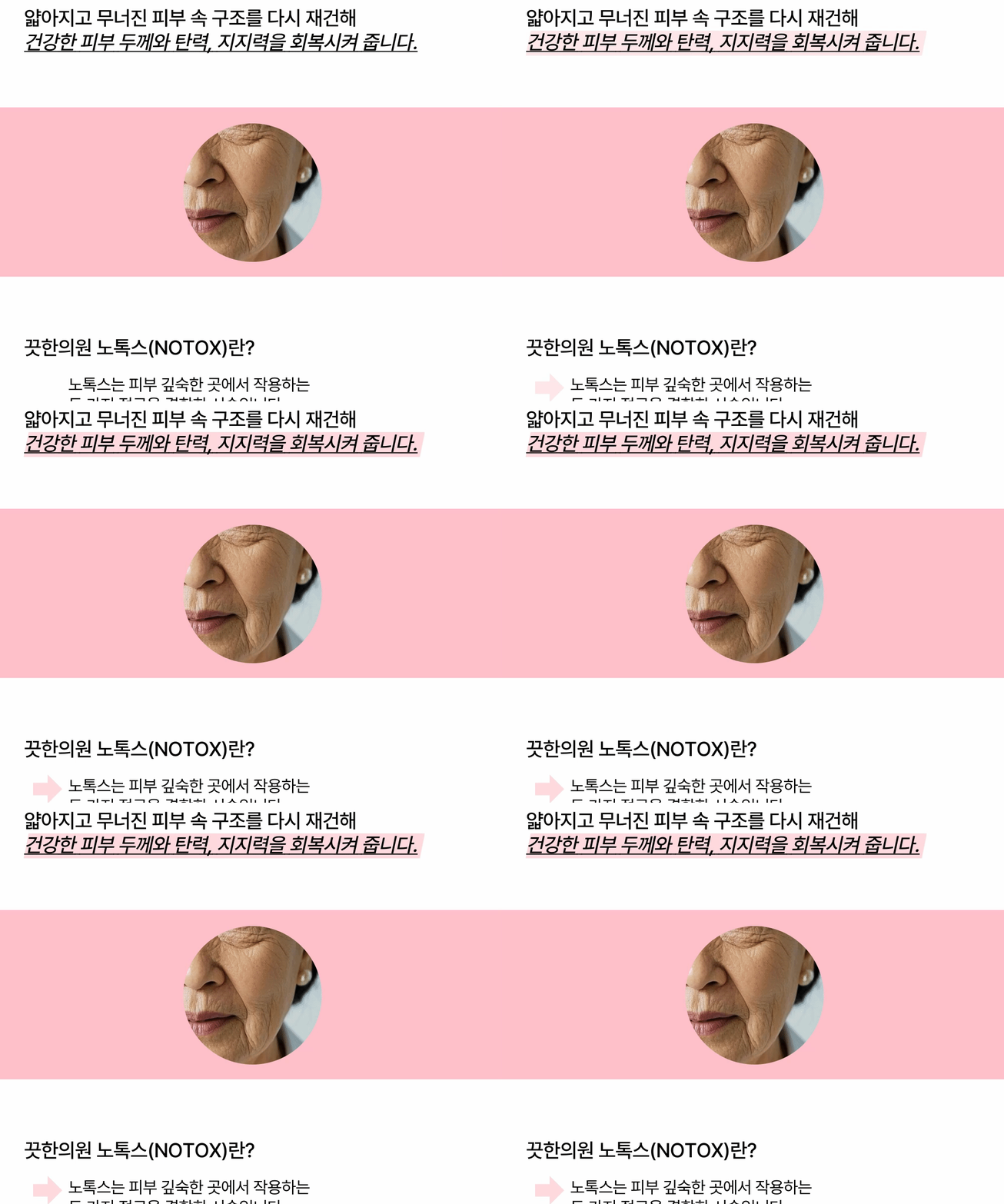
When considering wrinkle management, many people often think of Botox first.
Botox procedures target wrinkles that appear due to facial expressions, such as those on the forehead, glabella, and around the eyes,
and can help to alleviate them relatively quickly.
However, Botox temporarily controls muscle movement
to prevent wrinkles from deepening.
This makes it difficult to directly reverse the fundamental processes of skin aging.
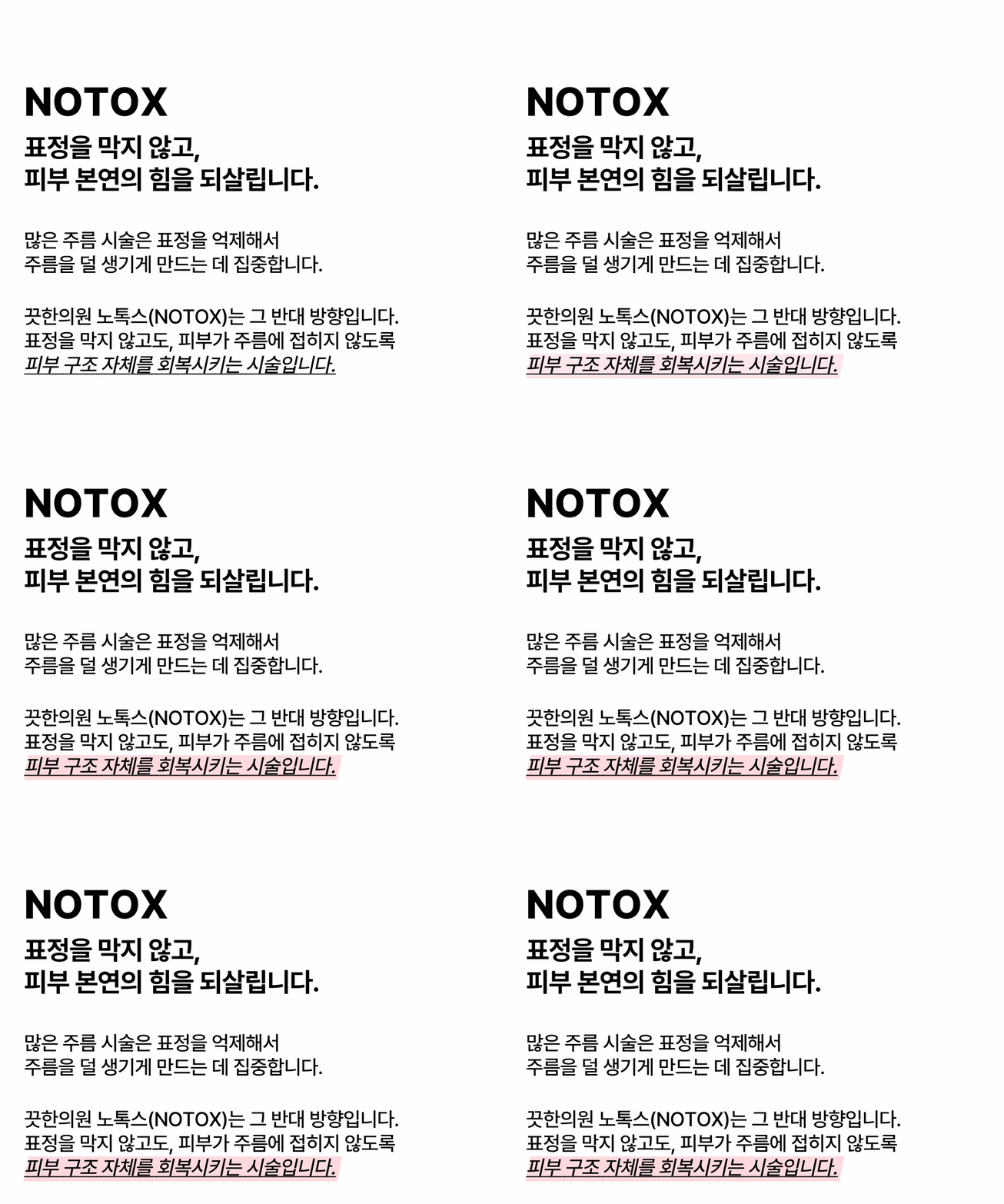
Kkeut Oriental Medicine Clinic's ‘NOTOX’ goes beyond alleviating wrinkles,
focusing on regenerating and healthily restoring the skin's internal structure.
While Botox temporarily controls muscle movement to improve wrinkles,
NOTOX can be seen as a procedure that helps restore the skin's inherent health and reduce wrinkle formation.
───────────────
Three Key Considerations for Wrinkle Improvement
1. Dermal Layer Regeneration
Areas where wrinkles appear often have a thin and weakened dermal layer.
Restoring such skin to a healthy state can have a positive impact on wrinkle improvement.
2. Collagen/Elastic Fiber Reorganization
Reorganizing the collagen and elastic fiber structures in the dermal layer, which become disordered due to skin aging, helps restore the skin's supportive strength.
3. Enhanced Support
For areas that fold due to repetitive movements, strong internal support from within the skin is crucial.
It is beneficial to increase the skin's density through this.
*Botox procedures do not directly influence these three factors.
Instead, by controlling the movement of muscles that create expressions,
it is an external method that reduces the deepening of wrinkles.
Due to this approach, the effects may be temporary, and there may be limitations to long-term maintenance.
───────────────
Areas Where NOTOX Procedures Can Be Considered
1. Forehead Wrinkles
This refers to cases where deep wrinkles form on the forehead due to repeated facial expressions.
Repeated Botox procedures can sometimes lead to eyebrow drooping or an unnatural appearance.
If NOTOX procedures are used to improve skin thickness and aid regeneration, a natural improvement in forehead wrinkles can be expected.
2. Glabellar Lines
Glabellar lines are an area prone to developing into deep, fixed wrinkles.
Some opinions suggest that even after Botox procedures, fine lines may remain or expressions might appear somewhat awkward.
NOTOX procedures promote internal skin regeneration and internally improve the structure around wrinkle lines, allowing for natural changes.
3. Fine Lines Around and Under the Eyes
The areas around and under the eyes have thin and sensitive skin.
During Botox procedures, excessive dosage can make expressions around the outer corners of the eyes appear unnatural when smiling.
By utilizing ingredients that aid dermal regeneration, health can be promoted from within the skin,
and natural improvement can be pursued with ingredients that provide delicate support.
4. Nasolabial Folds
Nasolabial folds are not simply caused by facial movements alone. They often appear due to complex factors such as sagging cheeks and decreased skin elasticity.
For these nasolabial folds, improvement may be limited with Botox treatments alone.
NOTOX treatment can help to restore healthy skin thickness and strengthen the internal skin structure that supports sunken volume areas.
5. Perioral Wrinkles
The area around the mouth is prone to frequent movement and has thin skin, making it susceptible to easy wrinkle formation.
If Botox treatment is performed in this area, there is a possibility that expressions may appear somewhat unnatural when speaking or smiling.
NOTOX treatment can aid in skin regeneration and strengthen supporting structures, thereby promoting the reduction of perioral wrinkles while maintaining natural expressions.
6. Sunken Area Below the Corners of the Mouth (Marionette Lines)
As we age, subcutaneous fat in this area decreases and the skin thins, which can cause it to become hollow or sunken.
Marionette lines are static wrinkles caused by skin sagging or volume loss rather than facial expressions, so expecting significant effects from Botox alone may be difficult.
By filling the skin with regenerative components and delicately refining the lines, it can help enhance the skin's supportive capacity.
───────────────
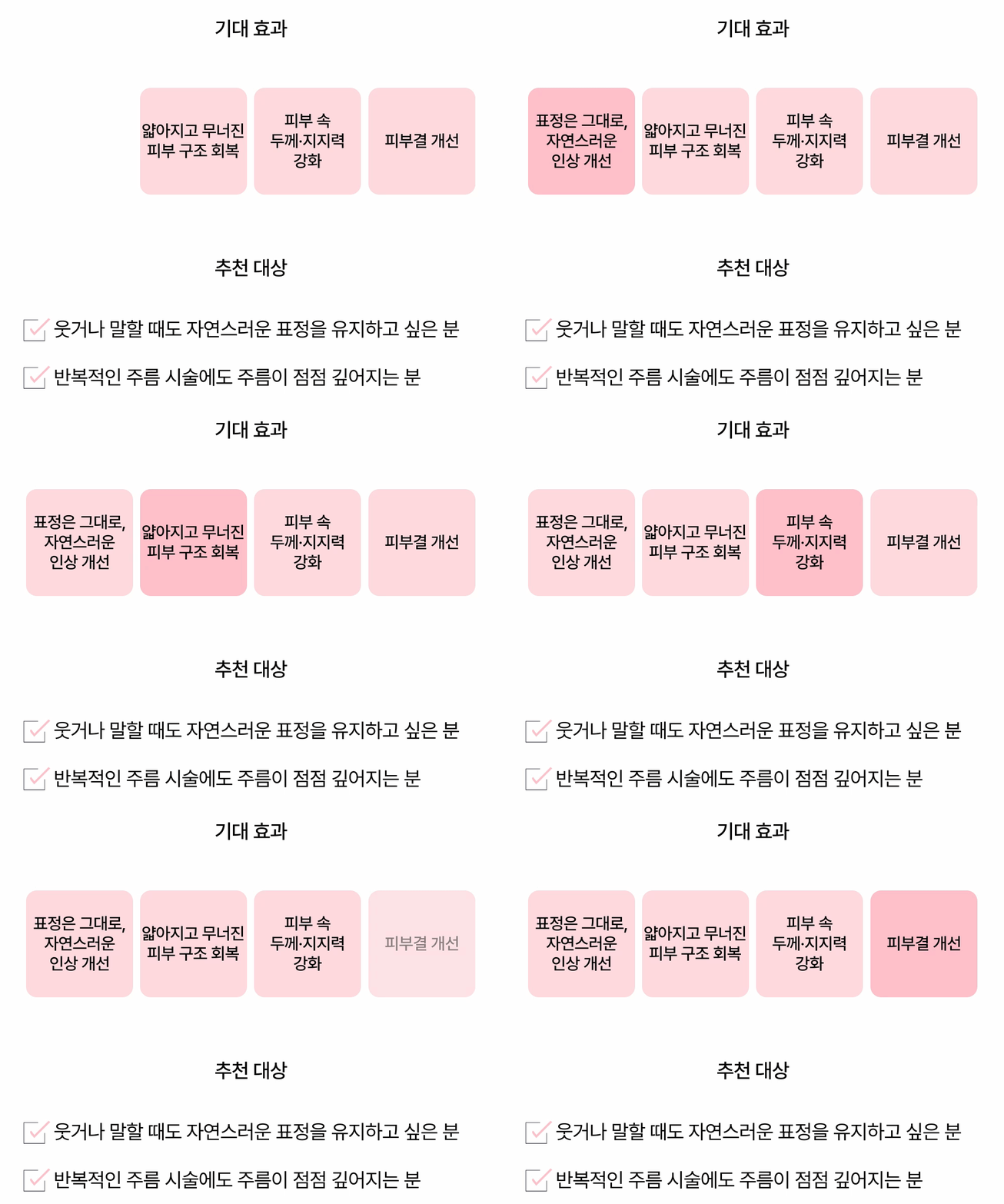
Recommended for
- 1. Those who worry that repeated Botox treatments might lead to stiff or unnatural expressions.
- 2. Those who still have fine wrinkles or feel that wrinkle improvement is insufficient even after Botox treatment.
- 3. Those who are concerned about their thin skin causing wrinkles to deepen.
- 4. Those who seek long-term wrinkle reduction by restoring the skin's natural health, rather than just temporary improvement.
시술 진행 순서
첫 상담부터 마무리까지의 실제 진행 순서를 확인하세요.
- 01
개별 세안
- 02
마크뷰(Mark-Vu)를 이용한 피부 상태 면밀 분석
- 03
개별 맞춤 상담 진행
- 04
원장과의 디자인 논의 후 시술 진행
- 05
재생 크림 도포로 마무리
시술 기본정보
시술 시간, 마취, 회복, 유지기간을 한 번에 확인하세요.
TIME
30분 이내
ANESTHESIA
연고 마취
RECOVERY
즉시 일상생활 가능
DURATION
6~12개월
Q&A
고객님들이 가장 많이 물어보시는 내용을 모았습니다.
How does NoTox treatment differ from Botox?

Typical Botox alleviates wrinkles by temporarily reducing muscle movement. In contrast, NoTox works by creating new support structures within the skin, helping expressions appear natural and potentially reducing the burden of returning to daily life.
When can I expect to see changes after NoTox treatment?
Approximately 3 weeks after the treatment, new collagen production is induced, and skin improvement can be expected. Results may vary depending on the individual.
What is the appropriate treatment interval?
The recommended interval may vary depending on individual skin condition and response, but generally, treatment can be considered every 3-4 weeks. It is best to decide after consulting with a specialist.